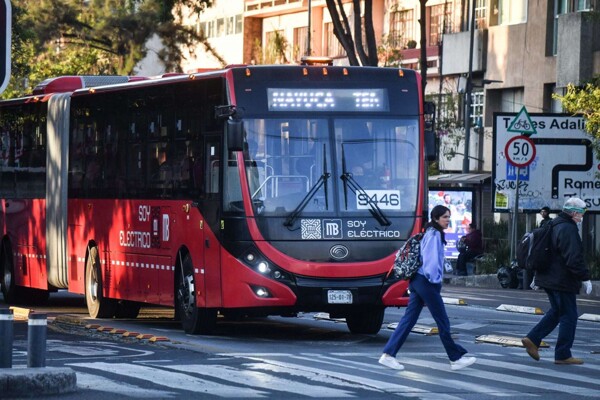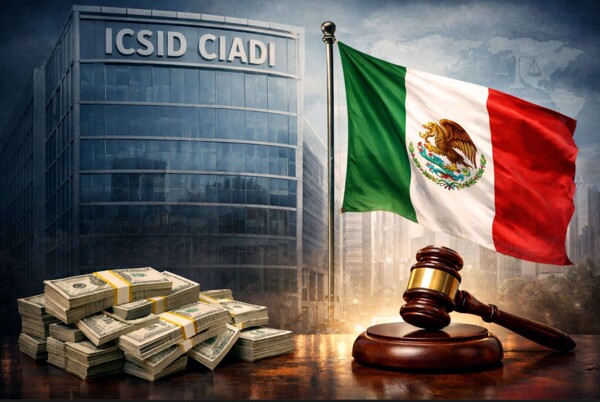
Mexico was chosen in 2018 as one of the hosts for the FIFA World Cup, which officially kicks off on June 11. At that time, the federal government of Enrique Peña Nieto was nearing the end of its term, and the government of Mexico City was led by the current president, Claudia Sheinbaum. Everyone celebrated being chosen as a host city. Years have passed, and with the World Cup nearly upon us, the main host cities have declared themselves ready or nearly ready to receive visitors, although major construction projects are underway, many of which will not be completed by June 11. We will see if, at least as promised, this issue is resolved; for now, it is just a first exhibition match with pending issues. PayJoy hires Iván Canales. April will bring new changes and executives to the financial and service industries. PayJoy, which provides credit for the acquisition of cell phones to the so-called base of the pyramid, has hired Iván Canales, former director of Nu México, who was in charge of a large part of the process of transforming the Sofipo into a bank. On the other hand, formal businesses near the stadium are not very happy about the upcoming World Cup due to the impending police operations. The previous Saturday, traffic jams began around 1 p.m. in the so-called 'last mile' area, but they actually extended a bit further. In this way, formal businesses such as restaurants, shoe stores, parking lots, cinemas, and others were left deserted, and their employees had to go out into the street to look for the few customers walking towards the stadium; while it can be argued that it is only five dates, this affects those who receive the least income, and tips are an important part of their livelihood. It is a pity that the six-year-old project to regenerate the area remained only on paper. However, a point in its favor was that piracy was at a minimum level and far from the stadium. A downside was that the accesses to the stadium collapsed due to the multitude, to the point that body searches disappeared and the eternal turnstiles made the movement of people inside very slow, which is also a security problem. What needs to be highlighted is that inside the pitch was wonderful and the facilities looked very good, but the internet signal and payments via terminal did not pass the final test, when compared to stadiums in other countries where one can be connected without any problem. It turns out that in the case promoted by Espíritu Santo Holdings LP and L1bre Holding LLC against Mexico, under the framework of the North American Free Trade Agreement (NAFTA), they lost. The companies argued that between 2016 and 2018 they tried to develop a digital taximeter system in the country's capital, but they accused the Government of Mexico City of causing the project to fail, even alleging the appropriation of their technology. When going to international arbitration, a tribunal of the International Centre for Settlement of Investment Disputes (ICSID), an organization of the World Bank, rejected in its entirety the claims of two foreign companies demanding compensation of more than 2.1 billion dollars, an unrealistic figure. At least on this occasion, the Secretariat of the Economy, currently led by Marcelo Ebrard, worked for several years on that lawsuit that ended up being dismissed since there is no proof of investment, but the most important thing is that the ICSID ruled that the companies must cover the expenses and costs associated with the arbitration; good work done by the General Directorate of International Trade Legal Consulting of the Undersecretariat of Foreign Trade, with the support of the firms Pillsbury Winthrop Shaw Pittman LLP and Tereposky & DeRose. Key human capital at Bimbo. Today, business growth is directly linked to the employee's experience, which is why more and more paths are being seen for companies to build inclusive, safe work environments with real development opportunities, as this has ceased to be an aspiration to become an indispensable condition for competitiveness. In this context, it is worth looking at Bimbo, led by Daniel Servitje. In the first edition of Merco Talento Iberoamérica, which evaluated the most attractive companies for employees and specialists in different markets, it ranked third in the food sector, being the only Mexican company to achieve this recognition. Beyond the ranking, the result is relevant because it reflects the solidity of a talent management model capable of being replicated in different geographies, maintaining a consistent organizational culture with purpose, and for a reason the brand has presence and, above all, global growth and recognition. An example to follow. For now, the outcome is still up in the air. It's enough to take a tour, for example, to Monterrey, a state governed by Samuel García, where the metro construction works have become the scene to simulate with his wife Mariana Rodríguez a scene from the movie Titanic; poor taste if we know how the movie ends, but it is under construction and well, in some upcoming year that investment made and that will be a great step in mobility for one of the cities with the greatest growth in the country and that we have to say it, with the best levels in education, employment, and security, that yes for the World Cup the metro will not be completed. While in Mexico City, which is governed today by Clara Brugada, the most visible works are those carried out on the Calzada de Tlalpan, and at the height of the San Antonio metro station where they are making cuts to circulation for improvements on that stretch, and of course, the extra light trains, which will be insufficient for the five dates and more with the mobility plan that was applied and that left pending issues to resolve. However, all the plans that were to improve the area around the Azteca stadium, now Banorte, will remain as good intentions. Now they tell us he will be in charge of carrying the international markets of the group. PayJoy will have Canales in charge of countries in Indonesia, Africa, as well as in Latin America such as Colombia, Peru, Panama, Ecuador and of course Mexico, so he will be traveling to see the expansion of the financier. The company that in many cases gives the first loan to its customers, and does not charge late interest, but everything is included in the agreement of the payments that are made from the contract and they expect to be up to date with the monthly amount agreed, in our country has as director Nicolás Schiaffino, who will soon report to Canales, once it is expected to assume the position in the coming weeks. The financing they give for cell phones, which started in African countries, allows people to increase their income by about six percent, in addition to having their first credit and allows independent workers, such as deliverymen and micro-entrepreneurs, to grow their businesses. A win for CDMX. The Federal government scored a victory in the international lawsuit in the Mexico City taximeter case, dating back to 2016.